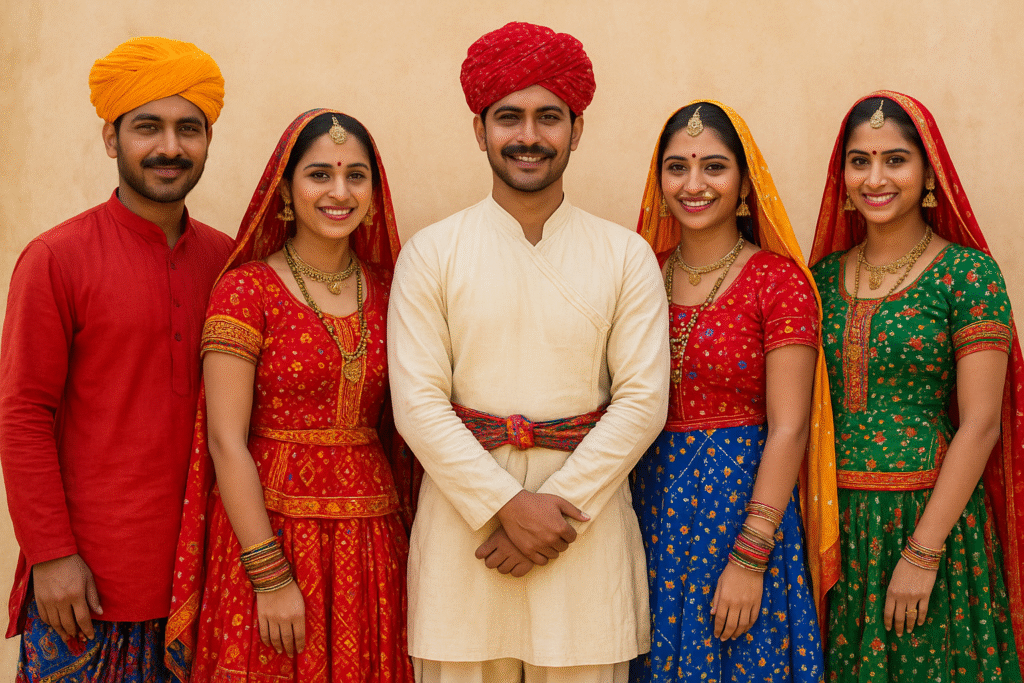
Rajasthan, the vibrant desert state of India, is renowned not only for its majestic forts, palaces, and golden sands but also for its colourful and distinctive clothing. Traditional Rajasthani attire is more than fabric stitched together it reflects history, climate, social customs, and artistry. The attire of men and women in Rajasthan has evolved over centuries, yet it continues to hold cultural significance. This blog explores Rajasthani clothing in depth, covering men’s wear, women’s attire, regional variations, textile traditions, jewellery, festivals, and modern fashion.
Men’s Traditional Clothing
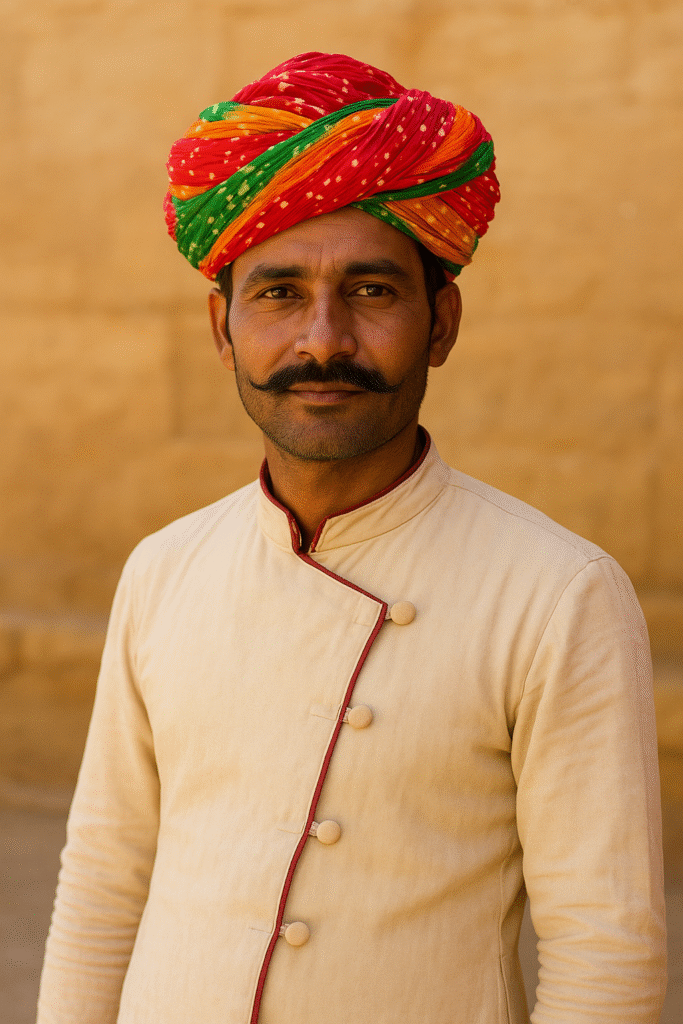
The most striking feature of men’s attire in Rajasthan is the Pagri, or turban. It is not only a head covering but also a symbol of respect and identity. Every district has its unique style, colour, and method of tying. Bright saffron or red turbans are worn during festivals, while white turbans are associated with mourning. Farmers often use long turbans to protect themselves from the scorching sun, while royals prefer elaborately embroidered turbans with jewels.
The Angarkha, a wrap-style tunic, is another key element of male clothing. Light cotton Angarkhas are worn daily, while silk and brocade versions are reserved for celebrations. The Kurta, paired with Dhoti or Pyjama, provides both comfort and elegance. Another famous attire is the Jodhpurs trousers originating from Jodhpur, designed for horse riding. With flared hips and tight calves, Jodhpurs are now worn worldwide and often paired with formal jackets.
Accessories play an important role in male attire. Mojari (embroidered footwear), Kamarbandh (waistbands), and jewellery such as earrings, chains, and kadas complement the outfit. In Rajasthan, jewellery for men is not unusual; it is a display of power, wealth, and masculinity.
Women’s Traditional Clothing
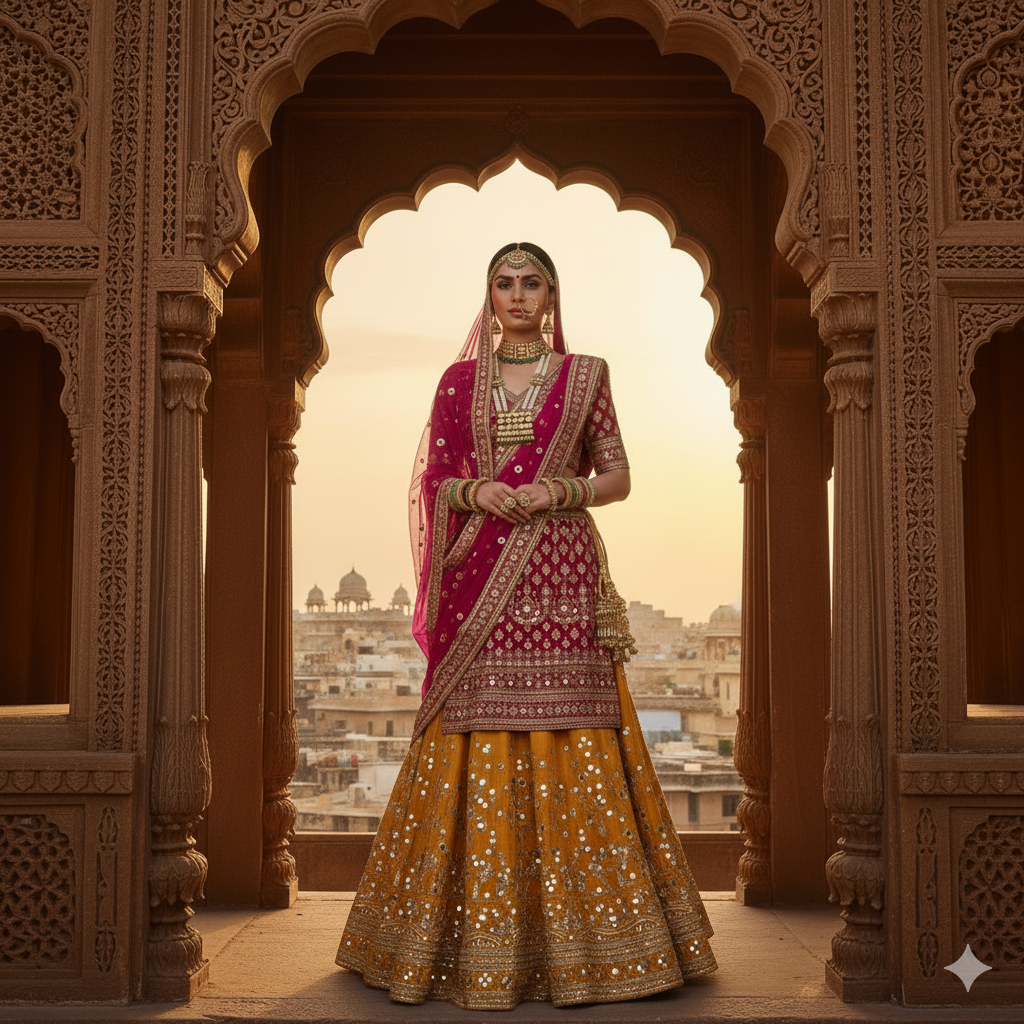
The most iconic women’s attire is the Ghagra-Choli, complemented by an Odhni. The Ghagra is a long, pleated skirt, the Choli is a fitted blouse, and the Odhni is a veil draped over the head or shoulders. These garments are decorated with embroidery, mirror work, and vibrant colours, perfectly suited for the desert climate.
Textile traditions give Rajasthani women’s clothing its distinctiveness. Bandhani, or tie-dye, creates dotted patterns in red, yellow, and green. Leheriya produces striped, wave-like patterns and is especially worn during festivals such as Teej. Gota Patti embroidery, made from gold or silver lace, is most popular for bridal attire.
Jewellery is an inseparable part of women’s attire. Women wear Borla (a spherical maang tikka), Nath (large nose ring), Kaanbali (earrings), and dozens of Chooda (lac or ivory bangles). Heavy anklets (Payal) and silver ornaments dominate rural regions, while gold jewellery is more common in urban and royal families. Each ornament carries symbolic meaning, often connected with marital status and prosperity.
Regional Variations
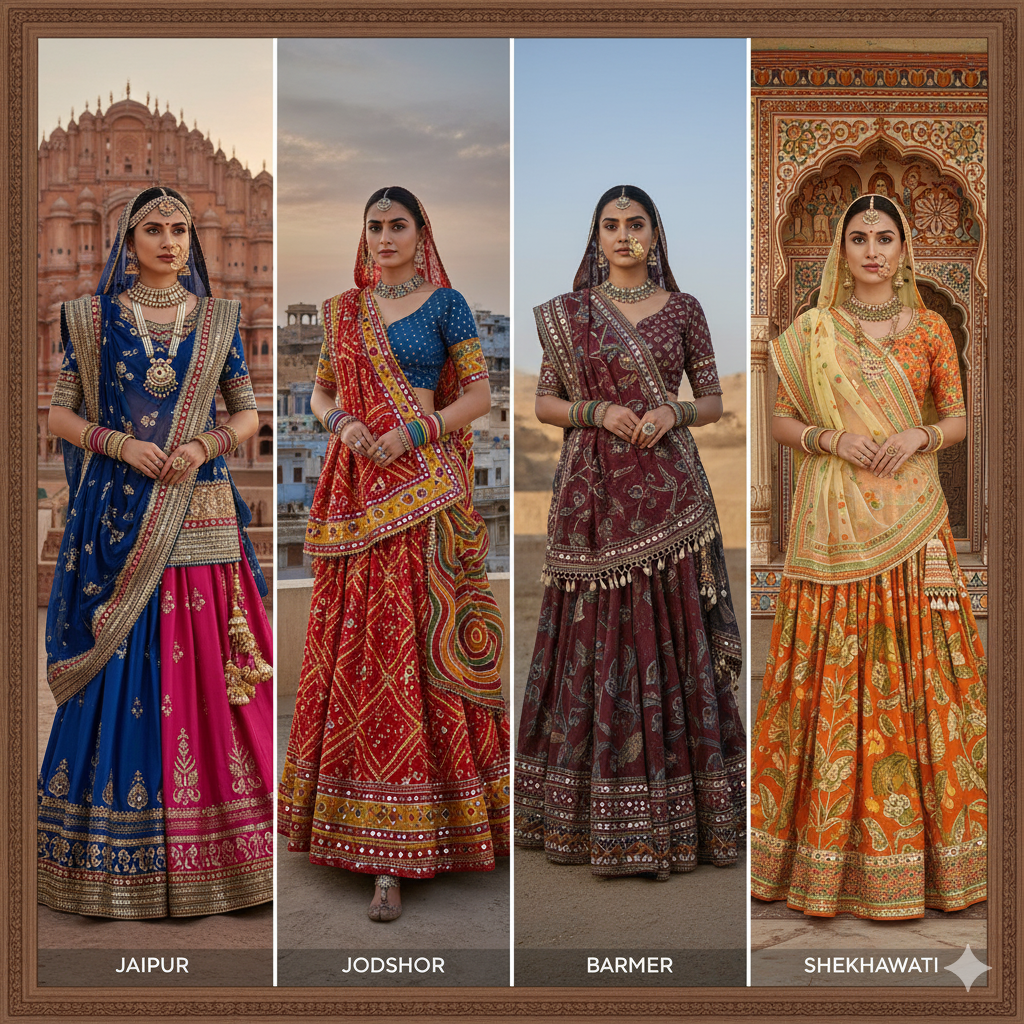
Rajasthan’s vastness ensures that clothing differs from region to region. In Jaipur, women prefer pastel Leheriya dupattas and Bandhej sarees, while men wear tailored kurtas with decorative turbans. In Jodhpur, men are known for their famous Jodhpuri pants and jackets, while women wear heavier Bandhani sarees with bold patterns. Barmer has a unique style where women wear black ghagras with red odhnis, creating a striking contrast. Shekhawati women are recognised for bright odhnis with heavy silver jewellery, giving a regal appearance. These regional styles show how geography and culture influence attire while preserving a collective Rajasthani identity.
Colours and Symbolism
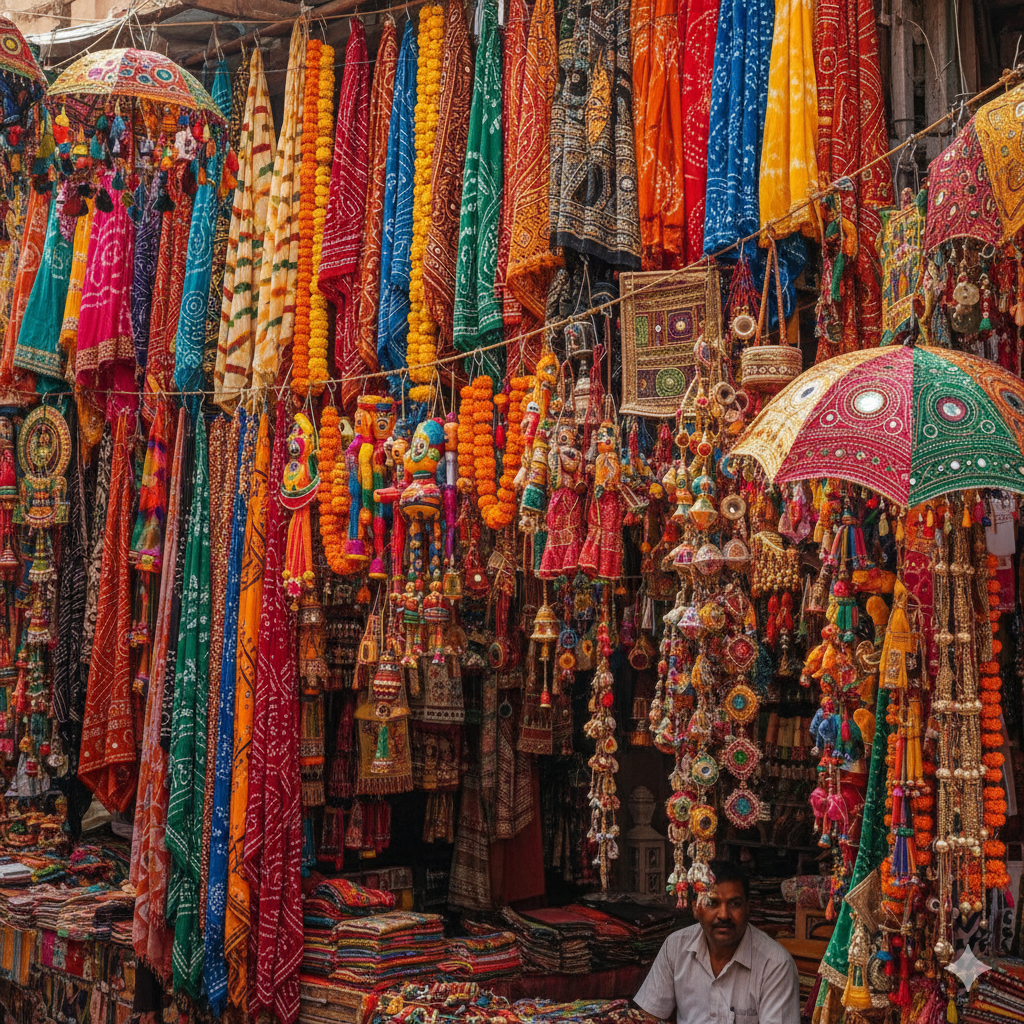
Colours in Rajasthani clothing are carefully chosen and often carry symbolic meaning. Red represents love and marriage and is commonly worn by brides. Yellow symbolises prosperity and spring, often seen during Basant Panchami and other festivals. Orange indicates valour, energy, and spirituality, while white signifies peace and mourning. Even in the harsh desert, people embrace vibrant shades, making Rajasthan appear like a moving painting of joy and pride.
Clothing During Festivals and Weddings
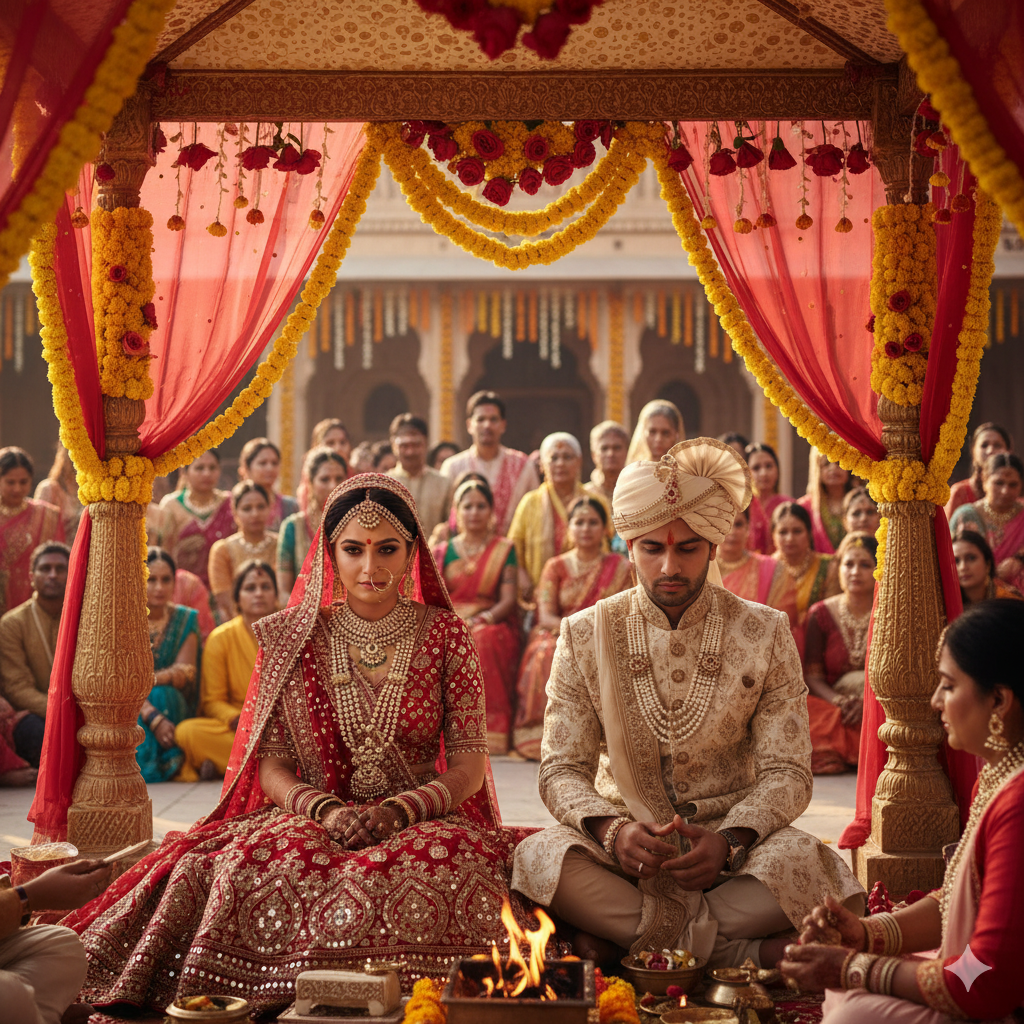
Festivals and weddings in Rajasthan transform clothing into works of art. During Teej and Gangaur, women wear newly dyed Leheriya dupattas and Bandhani sarees, often applying intricate henna designs on their hands. During Diwali, Ghagra-Cholis with Gota Patti embroidery dominate. Weddings are the grandest display of clothing. Brides wear heavily embroidered red or maroon ghagras adorned with gold jewellery, while grooms wear silk angarkhas, churidars, and turbans with sarpech (turban ornaments). This attire not only reflects fashion but also family pride, tradition, and blessings of prosperity.
Modern Influence and Global Appeal
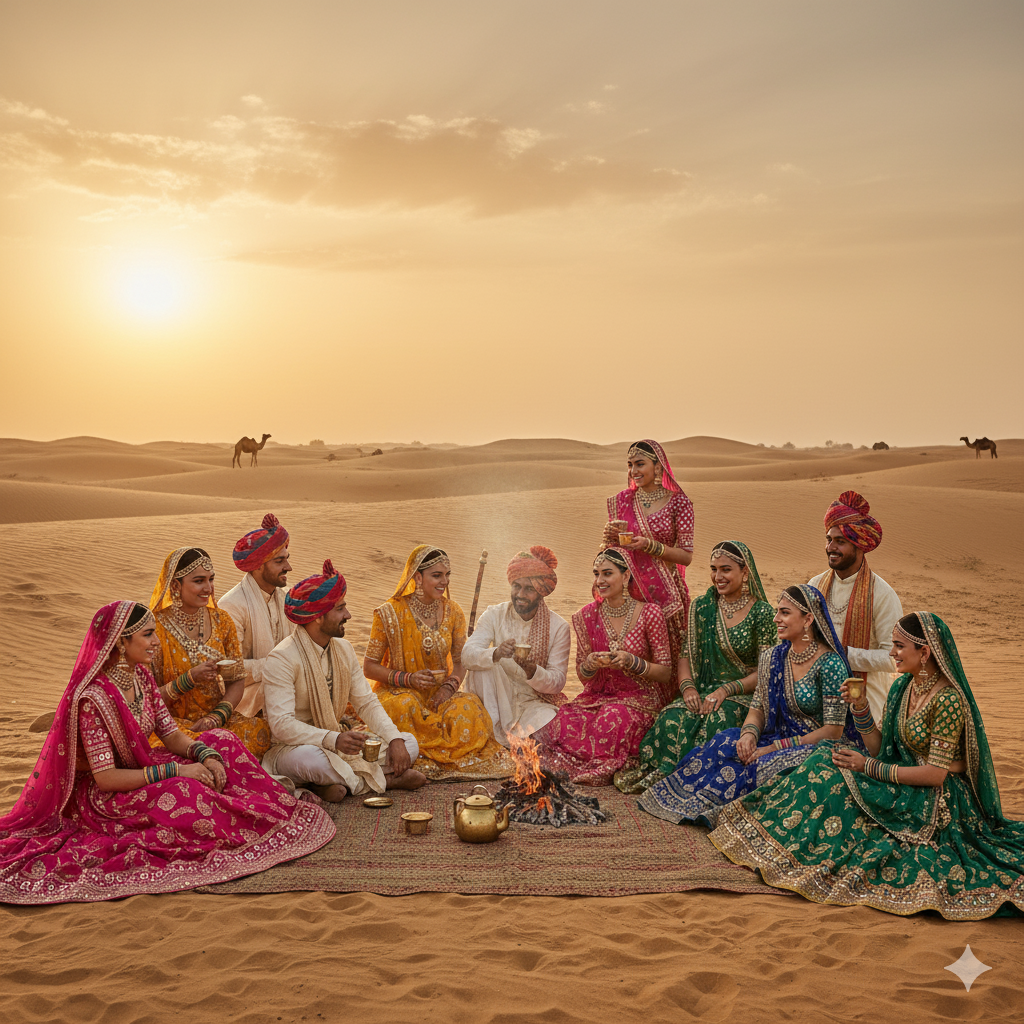
While deeply rooted in tradition, Rajasthani clothing has influenced modern fashion globally. Designers in India and abroad incorporate Bandhani prints, mirror work, and Gota Patti embroidery into contemporary collections. Jodhpuri suits are now popular formal wear for weddings and official functions, blending tradition with modern tailoring. Bandhani dupattas are paired with contemporary kurtis, and Leheriya sarees are worn with modern blouses. Bollywood celebrities and global designers frequently showcase Rajasthani-inspired outfits, proving their timeless appeal. Even international fashion houses have experimented with tie-dye techniques similar to Bandhani, acknowledging Rajasthan’s contribution to global style.
This enduring charm highlights that Rajasthani clothing is not merely attire; it is a living expression of culture, climate, and creativity. Men’s turbans, Angarkhas, and Jodhpurs symbolise honour and identity, while women’s ghagras, odhnis, and jewellery represent tradition, beauty, and social values. Regional variations, symbolic colours, and festival attire make this clothing system highly diverse yet united under one cultural umbrella. The vibrancy and richness of these garments continue to inspire fashion worldwide, ensuring that Rajasthan’s heritage remains alive and celebrated.